Branding is no longer limited to advertisements, packaging, websites, and social media. Modern businesses are increasingly exploring physical products that allow customers to interact with a brand in everyday life. Small accessories have become particularly useful because they are portable, personal, and easy to integrate into different marketing activities.
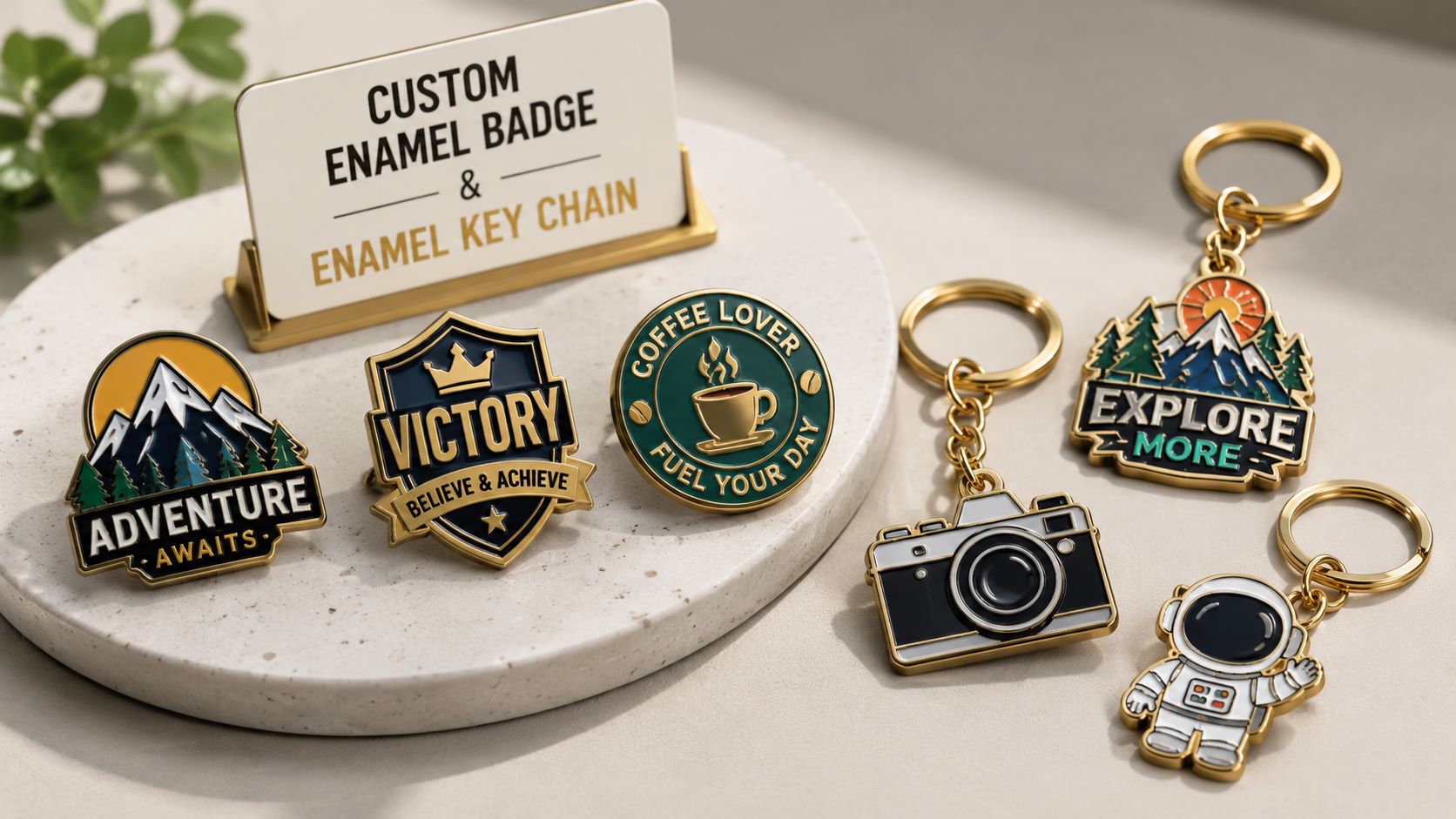
Among these products, the custom enamel badge and enamel key chain offer an interesting combination of creativity and practicality. From independent artists and fashion labels to schools, corporate organisations, travel businesses, clubs, and event organisers, enamel accessories can be adapted to a surprisingly wide range of purposes.
What makes them interesting is not simply their size or appearance. Their real strength is the ability to turn an idea, identity, memory, or visual concept into something tangible.
The Shift Towards More Personal Promotional Products
Traditional promotional merchandise often follows a predictable formula: choose a standard product and print a company logo on it.
Today’s audiences generally expect more thoughtful experiences.
A promotional accessory becomes considerably more interesting when its design has meaning. Instead of simply displaying a business name, brands can create merchandise inspired by their products, history, customers, locations, mascots, or communities.
A coffee shop, for instance, could create a badge shaped like its signature coffee cup. A travel company could develop destination-themed accessories. A sports club could turn its mascot into collectible merchandise.
This creative flexibility is one reason enamel accessories work across many industries.
Why a Custom Enamel Badge Can Tell a Story
A custom enamel badge provides a small visual space, but that limitation can actually encourage stronger design.
There is little room for unnecessary information. The artwork needs to communicate an idea quickly through shape, colour, text, or symbolism.
That makes badges particularly suitable for storytelling.
They might represent:
- An organisation’s anniversary
- A special achievement
- Membership in a community
- An awareness campaign
- A memorable event
- A brand mascot
- A product launch
- A destination
- A hobby or interest
- A limited-edition collection
When people associate meaning with the design, the badge becomes more than promotional merchandise.
It can represent a memory, achievement, identity, or connection.
Enamel Key Chains Combine Creativity with Everyday Use
While badges are primarily decorative, an enamel key chain introduces an additional functional element.
People carry keys almost everywhere. Key chains are also frequently attached to backpacks, handbags, travel bags, pencil cases, and other personal belongings.
This means a thoughtfully designed key chain can remain in regular use long after the original marketing campaign has ended.
The challenge is creating something that people actually want to carry.
Simply placing a large advertisement onto a key chain may not achieve that objective. Designs should instead focus on visual appeal while allowing branding to appear naturally.
A distinctive symbol can sometimes represent a company more effectively than several lines of promotional text.
Good Merchandise Begins with Understanding the Audience
Before creating any customised product, businesses should consider who will receive it.
Merchandise intended for corporate employees will probably require a different design approach from accessories created for music fans, school students, tourists, or fashion customers.
Understanding the audience can influence:
- Design style
- Product dimensions
- Colour selection
- Type of attachment
- Packaging
- Level of branding
- Quantity required
- Distribution method
A professional corporate badge may benefit from restrained colours and clean lines. Merchandise aimed at younger audiences might use more playful artwork and brighter colour combinations.
There is no universal design that works for every audience.
From Brand Logo to Wearable Artwork
One of the most common applications for a custom enamel badge is transforming a logo into wearable merchandise.
However, not every logo should be reproduced exactly as it appears on a website.
Complex gradients, very small text, fine lines, and photographic details may need simplification. The goal is to preserve the recognisable character of the brand while adapting the artwork to a small physical format.
Designers can concentrate on the strongest visual component of a logo rather than including everything.
This approach can result in a cleaner accessory that remains recognisable even from a distance.
Why Collectability Adds Extra Value
Enamel products can also be designed as collections.
Instead of releasing one design, businesses can develop several related pieces. Each accessory can represent a different product, location, character, achievement, season, or event.
Consider a museum creating badges inspired by different exhibits or a tourism company producing an enamel key chain for each destination it serves.
Customers can choose their favourite or gradually collect the entire range.
This creates an additional reason to engage with the merchandise.
Limited editions can further increase interest, particularly among communities where collecting is already part of the culture.
Choosing Between Badges and Key Chains
Both products offer customisation opportunities, but they serve slightly different purposes.
| Consideration | Custom Enamel Badge | Enamel Key Chain |
| Main appeal | Wearable decoration | Everyday functionality |
| Typical use | Jackets, caps, bags | Keys and bags |
| Collectability | Excellent | Very good |
| Branding potential | High | High |
| Event distribution | Convenient | Convenient |
| Fashion use | Strong | Moderate |
| Souvenir use | Strong | Strong |
A badge may be preferable when the objective is fashion, membership, recognition, or collecting.
A key chain may be better when practical everyday use is the priority.
Some campaigns can successfully combine both.
Creative Ideas for Different Industries
The flexibility of enamel accessories makes them relevant across multiple sectors.
Hospitality businesses can create miniature versions of signature dishes, drinks, or hotel icons.
Educational institutions can develop badges for clubs, achievements, houses, competitions, or alumni events.
Travel businesses can create destination-themed key chains featuring landmarks and cultural symbols.
Corporate organisations can use enamel accessories for employee recognition, anniversaries, conferences, or branded gifts.
Fashion brands can release seasonal badge collections that complement clothing and accessories.
Artists and creators can transform original characters and illustrations into physical merchandise.
The best concept usually connects directly with something the audience already recognises or values.
Details That Influence the Finished Appearance
A successful enamel product depends on more than artwork.
Size, metal finish, enamel style, edge quality, attachment, and packaging all contribute to the final impression.
A small custom enamel badge needs enough space for important details to remain visible. Similarly, an enamel key chain should be substantial enough to feel durable without becoming inconvenient to carry.
Metal finishes can also change the personality of the same artwork. Bright metallic finishes can create a contemporary appearance, while antique-style finishes can introduce a traditional or vintage character.
These decisions should support the overall design rather than being selected independently.
Common Mistakes When Creating Enamel Merchandise
Even strong ideas can produce disappointing results when the design is not prepared for physical production.
Common problems include:
- Overly complicated artwork
- Tiny or unreadable text
- Too many colours
- Weak colour contrast
- Extremely thin lines
- Poorly positioned attachments
- Inappropriate dimensions
- Ignoring packaging presentation
Another mistake is evaluating artwork only at a large digital size.
Designs should always be reviewed at approximately the dimensions of the final product. This provides a more realistic idea of whether important details will remain recognisable.
Creating Merchandise People Actually Want to Keep
The difference between forgettable promotional merchandise and memorable merchandise often comes down to desirability.
Ask a simple question: would someone still use this accessory if the promotional message were removed?
If the answer is yes, the design is probably moving in the right direction.
A useful or attractive product can naturally keep a brand visible without aggressive advertising.
This is particularly important for an enamel key chain, because everyday use depends on whether the recipient genuinely likes the design.
For badges, creativity, personal meaning, and collectability can provide similar motivation.
Frequently Asked Questions
1. What can be featured on a custom enamel badge?
Logos, symbols, characters, illustrations, lettering, mascots, and many other simplified designs can be used.
2. Who commonly uses enamel badges?
Businesses, clubs, schools, charities, artists, fashion labels, event organisers, and community groups are common users.
3. Are enamel key chains suitable for brand promotions?
Yes. Their everyday functionality makes them useful for promotional and branding campaigns.
4. Can enamel products have unusual shapes?
Custom outlines can often be created according to the artwork and production requirements.
5. Can badges become collectible merchandise?
Yes. Themed series and limited editions are particularly suitable for collectors.
6. Can an enamel key chain be used as a souvenir?
Yes. Destination symbols, landmarks, local artwork, and cultural themes work well for souvenir products.
7. Should a badge contain a lot of text?
Usually not. Short, readable wording tends to work better because badges have limited physical space.
8. Can businesses create matching badges and key chains?
Yes. Matching designs can help create a coordinated merchandise collection.
9. Is packaging important?
Packaging becomes particularly valuable when products are intended for retail, gifting, or premium presentation.
10. What makes a successful enamel design?
Clear artwork, strong visual identity, balanced colours, practical sizing, and attention to the intended audience are important factors.
https://newsgrow.blogspot.com/2026/09/custom-enamel-badge-and-enamel-key.html